Market Intel
MISO
MISO
Market Overview
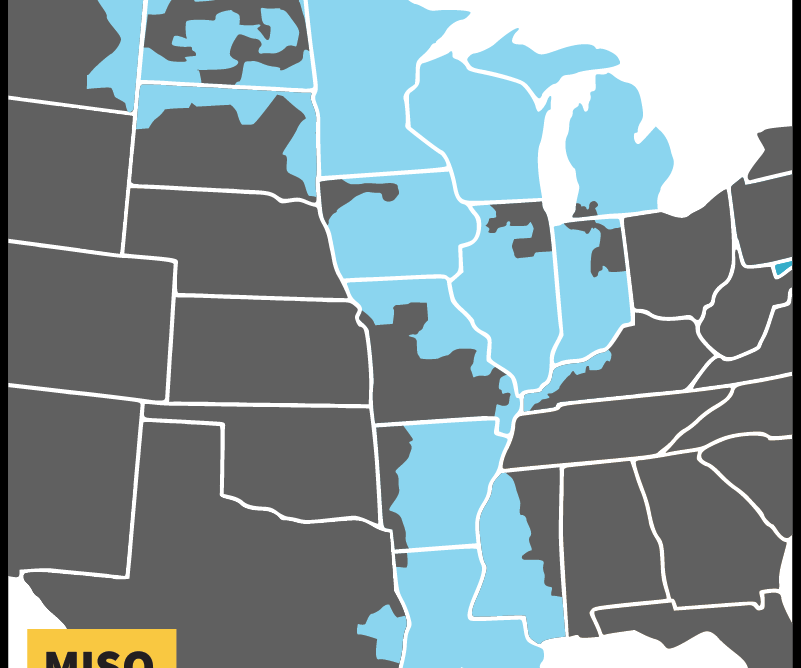
The Midcontinent Independent System Operator (MISO), operates the competitive wholesale electricity market spanning 15 U.S. states and Manitoba, supporting one of the largest transmission footprints in North America.
MISO is a relatively new market, developed within the last 10 years, and is still working though an operating structure that will allow for energy storage resources (ESRs) to participate while recognizing their unique characteristics. The ISO has acknowledged the need to enhance market constructs and accreditation models to ensure ESRs are properly incentivized, and have a number of studies underway or on the docket to evolve the market accordingly.
-
9GW
Load growth expected by 2029 -
163GW
Peak demand by 2035 -
75%
of the region’s load is served by utilities with decarbonization and/or renewable energy goals
Overall, MISO is a nascent market for energy storage. But given the shifting generation mix, emerging state-level programs, and underlying need for flexibility – there may be opportunities emerging.
An evolving market
MISO’s energy market is undergoing a critical transformation to address shifting reliability concerns, and growing renewable energy goals. All indicate there may be great additional value for storage assets, but are still in development and subject to change.
-

Load Growth
In addition to electrification, regions are seeing increased demand from data center development, and an influx of new manufacturing projects especially in Illinois, Indiana, and Michigan drive up energy demand.
- 8-14GW data centers are set to come online by 2027
- Data centers are predicted to use a 1/5 of all MISO’s electricity by 2030 and 1/4 of it by 2040
-

Renewable Energy Goals
Under MISO modeling scenario
Future 2A, which reflects all the clean-energy
goals that utilities and states have
publicly announced:- Wind and solar are projected to serve 80% of the region’s annual load by 2042
-

Market Model Evolution
To better accommodate ESRs and other emerging technologies, MISO is working to refine its market structure:
- Accreditation Model for ESRs: The ISO recognizes the need for an accreditation model tailored to storage assets’ unique characteristics.
- Look-Ahead Dispatch: A potential new dispatch and commitment model would optimize resource usage by considering future system conditions, enhancing efficiency and reducing costs.
Market Products
MISO operates several markets and strives to ensure reliable energy delivery.
-
Energy
The primary revenue driver today. Storage can bid into energy in the Day Ahead Market (DAM) and Real Time Market (RTM) to generate revenue from clearing prices, energy arbitrage (capturing the DART spread), and MISO’s not-so-infrequent price spikes.
-
Operating Reserves
This acts as offering insurance to the grid. You will get a payment for holding capacity, or offering to scale down generation, in moments where there is a mismatch between supply and demand. Bidding into AS can yield consistent returns, and still deliver high revenue during scarcity events.
-

Day Ahead (DA) Energy
Offer energy into the market for next-day delivery.
Energy
-

Real Time (RT) Energy
React to market fluctuations, capture price spikes and volatility during the operating day.
Energy
-

Regulation (Symmetric)
MISO’s fastest-responding, most procured, and highest priced Operating Reserve. Awarded resources follow an automatic signal (AGC) that adjusts output every four seconds to balance uncertainty between real-time dispatch and actual load. Cleared as “symmetric,” a resource must be able to either discharge or charge on demand, meaning BESS must have both headroom and energy — which needs to be balanced with wherever your arbitrage strategy wants the SOC.
Operating Reserves
-

Spinning Reserves
Backup capacity from online resources that can ramp within 10 minutes to respond to grid events that create significant imbalance.
Operating Reserves
-

Supplemental Reserves
Backup capacity from resources that are offline but can ramp up or down within 10 minutes to respond to grid events that create significant imbalance.
Operating Reserves
-

Ramp Up Capability
Resources are paid to hold back load to correct for net load uncertainty in upcoming intervals.
Operating Reserves
-

Short-Term Reserves
Deployed to recover system reliability within 30-minutes, this product is aimed to manage sub-regional, local, and market-wide flexibility needs.
Operating Reserves
Seasonal Capacity Market
Ensures sufficient resources are available during summer and winter peaks, with ESRs playing a growing role in addressing capacity shortages.
Active initiatives:
- Scarcity pricing: MISO has refined its Operating Reserve Demand Curve (ORDC) with an updated Value of Lost Load (VOLL) set at $35,000/MWh. This adjustment increases the price cap to $6,000/MWh to better reflect scarcity conditions, incentivizing more flexible resources like energy storage to participate
- Uncertainty product: Remains a concept but is under consideration by MISO.
Storage Opportunities
There is opportunity today for savvy storage operators, and generation owners able to add batteries to existing facilities. This opportunity only stands to grow in the coming years as MISO evolves the market.
-
Increasing volatility
Increasing energy demand plus the shift to more renewable generation sources, which are inherently intermittent, is increasing volatility and creating more arbitrage opportunities for storage resources.
-
Supplementing Generation Assets
Solar and wind contribution in MISO has been increasing faster than most realize. In fact, the solar production record increased 150% year-over-year. Renewables also comprise the majority of the interconnection queue. Companies will need storage to ensure reliable energy delivery and project revenue.
In addition to capturing high prices that generally coincide with time periods when renewable generation is low, in MISO, intermittent resources are not allowed to participate in AS, so storage unlocks new project revenue streams. -
Relieve Congestion
Strategically place batteries near areas of high congestion to capture energy when supply is greater than connection capacity, and deliver it to the grid later, once generation tapers off.
State-Level Incentives and Procurement Targets
In addition to federal regulations and regional market rules, state-level policies play an important role in shaping the deployment and operation of energy storage in MISO.
-
Renewable Energy Target:
100% by 2040Storage Procurement Target:
2.5GW by 2029 -
Renewable Energy Target:
100% by 2050Storage Targets:
3GW energy storage by 2030 -
Renewable Energy Target:
100% by 2040
Path to Go-Live
-
Interconnection Process

Submit an interconnection request, then progress through the three phases of the Definitive Planning Phase (DPP).
- System Impact Studies (SIS)
- Facility Studies
- Generator Interconnection Agreement (GIA)
-
Market Registration
ESRs must register with MISO as a market participant. This includes providing information about the asset’s capabilities, such as its ability to participate in energy, ancillary services, and capacity markets. Testing may be required to validate these capabilities.
-
Testing
MISO may require operational tests to confirm that the asset responds appropriately to dispatch signals and adheres to grid reliability standards. Testing includes performance during system constraints and compliance with market dispatch orders.
-
Hone Bidding Strategy
Ahead of operation, asset operators refine bidding strategies to align with MISO’s real-time (RT) and day-ahead (DA) markets. This includes participation in energy and ancillary service markets such as regulation and reserves.
Related Resources
Deep dives into U.S. Energy Markets
Explore market overviews and storage operating strategies across ISOs.
-
Market Intel
ERCOT: Fast growing, energy-only market servicing 24M+ Texans.
12/02/24
-

Market Intel
CAISO: Market-leading ISO supporting 32M+ in California
12/06/24
-

Market Intel
NYISO: Up and coming market serving ~20M New Yorkers.
12/06/24
-
Market Intel
ISO-NE: Emerging market for storage, covering 15M across six states.
01/06/25
-
Market Intel
PJM: The largest RTO by load and population, serving 65M+ across 13 US states and DC
12/06/24
-
Market Intel
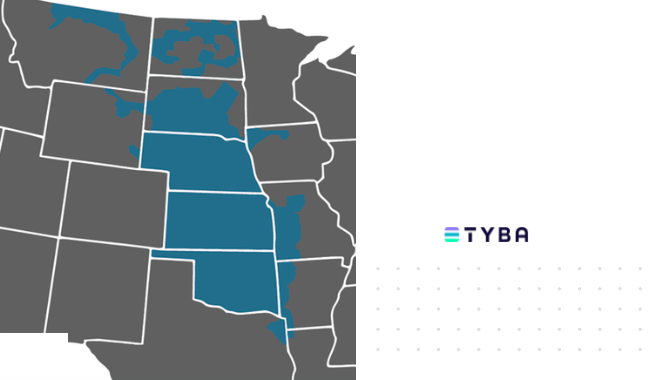
SPP: An energy market serving 14 U.S. states and ~18M people.
01/08/25